

Solar panels are now a common feature across many Melbourne schools, helping reduce energy costs and support broader sustainability goals. However, like any other building asset, they need ongoing maintenance to continue performing effectively. For schools, maintenance needs more careful planning than for a typical residential property.
Cleaning solar panels on an active school site involves more than simply accessing the roof and removing dirt. Student safety, staff movement, contractor access, timetable disruption, roof conditions and the timing of the work all need to be considered before cleaning begins.
A well-planned approach allows schools to maintain their solar systems without creating unnecessary disruption to lessons, staff activities or day-to-day operations. It also helps ensure the work can be completed safely and efficiently.
Why Solar Panel Cleaning Matters for Schools
School solar systems are often installed across large roof areas, operating for years in environments that may be exposed to contaminants like dust, pollen, leaves, bird droppings and airborne pollution.
Over time, these contaminants can settle on the surface of the panels and reduce the amount of sunlight reaching the solar cells. While some buildup may seem minor, contamination across a large commercial-style array can reduce the system’s performance.
Schools can be particularly exposed to certain types of contamination depending on their location. Campuses surrounded by mature trees may experience more leaves, pollen and organic debris, while schools near busy roads, construction zones or industrial areas may see more dust and airborne residue.
Bird activity can also be a recurring issue. Large roof areas and solar arrays can provide sheltered spaces for nesting, which may lead to additional droppings, feathers and debris around the panels.
Regular cleaning removes this buildup and gives schools a chance to keep a closer eye on the visible condition of their solar installation.
Why School Solar Panel Cleaning Requires Extra Planning
A school is very different from a private home or an empty commercial building.
There may be hundreds of students moving through the site throughout the day, along with teachers, administration staff, maintenance teams, parents and visitors. Any contractor activity therefore needs to be coordinated around normal school operations.
Solar panel cleaning may involve roof access, ladders, safety equipment, exclusion zones and movement around areas that students normally use. These activities need to be carefully controlled.
This is why professional solar panel cleaning in Melbourne schools often requires more scheduling and communication than a standard residential cleaning job.
The objective is not simply to clean the panels. The work needs to be completed in a way that supports site safety, protects students and staff, and avoids unnecessary interruption to learning.
Student and Staff Safety Should Come First
Safety should always be the main consideration when organising solar panel cleaning on school grounds.
Before work begins, the cleaning team needs to understand how the site operates, where students move throughout the day and which areas may need to be temporarily restricted.
Establish Safe Work and Exclusion Areas
Depending on the building and roof layout, some areas beneath or around the work zone may need to be kept clear while cleaning is underway.
This helps reduce the risk of students or staff entering areas where contractors are accessing the roof or using equipment.
The exact requirements will vary between schools. A single-storey administration building may present very different access conditions from a multi-level classroom block, gymnasium or large hall.
Planning these areas before contractors arrive makes the process much smoother.

Control Roof Access Carefully
Roof access is one of the most important safety considerations.
School staff should not need to access the roof to check whether panels are dirty or to prepare them for cleaning. Professional contractors should manage the necessary access arrangements using appropriate safety procedures and equipment.
Access points should also be positioned and controlled so students cannot approach ladders, roof hatches or other temporary access equipment.
Consider Student Movement Throughout the Day
School activity changes constantly.
Students may move between classrooms every hour, gather in courtyards during breaks, attend sport sessions outdoors or use buildings differently depending on the timetable.
A location that appears quiet early in the morning may become extremely busy at lunchtime.
For this reason, solar panel cleaning should be planned around actual site use rather than simply selecting a convenient date.
When Is the Best Time to Clean Solar Panels at a School?
No single cleaning time suits every school, but scheduling work during quieter periods can significantly reduce disruption.
School Holidays
School holidays are often one of the most practical times to complete solar panel cleaning.
With fewer students on site, contractors can usually move around the property more easily, and exclusion areas are simpler to manage. Roof access can also be arranged without needing to coordinate around class changes, assemblies or playground activity.
Holiday periods can be particularly useful for larger solar installations that may require more time to clean.
However, schools should still consider whether holiday programs, maintenance projects, construction work or staff activities will be taking place at the same time.
Pupil-Free or Curriculum Days
Pupil-free days can also provide a useful opportunity for maintenance.
Although staff may still be on site, the absence of students can make access and safety management considerably easier.
For smaller cleaning jobs, this may provide enough time to complete the work without waiting for the next major holiday period.
Before or After School Hours
In some situations, cleaning outside normal school hours may be appropriate.
Early morning or after-school scheduling can reduce contact with students and allow contractors to access areas that would otherwise be busy.
However, there are practical limits. Lighting conditions, weather, roof temperature and the amount of work required all need to be taken into account.
For larger systems, trying to fit the entire clean into a short window outside school hours may not be the most efficient option.
Weekends
Weekend work can provide another low-disruption option, particularly when the school site is generally quiet.
Schools should still check for sporting events, community use, weekend programs or facility hire before scheduling the work.
Many school grounds are used extensively outside normal teaching hours, so weekends are not automatically free of activity.
Weather Conditions Can Affect the Cleaning Schedule
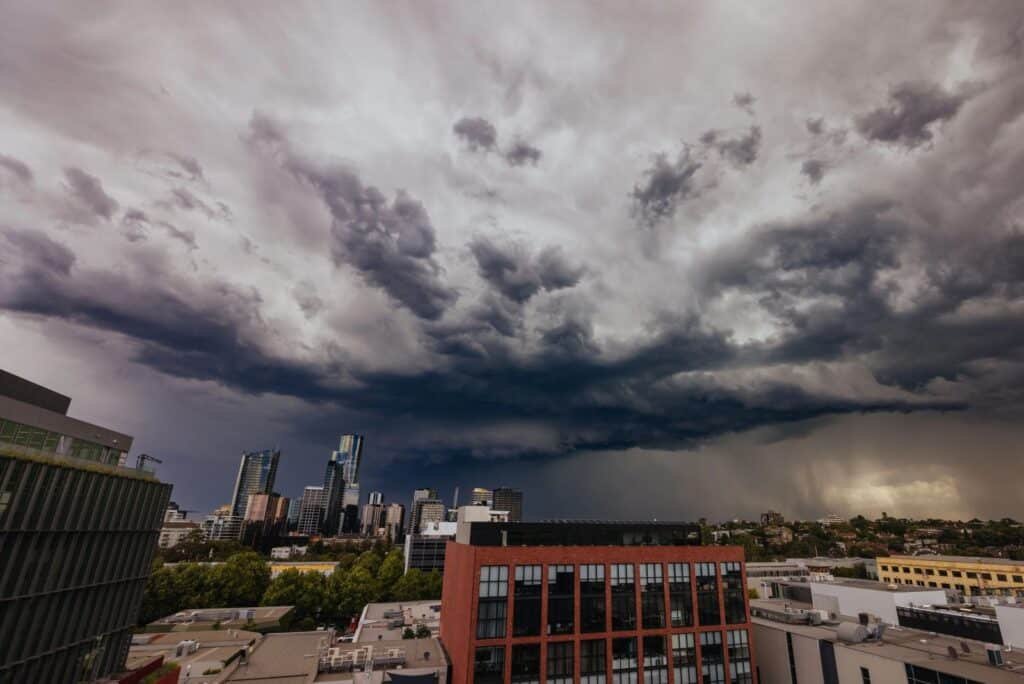
Weather conditions also affect solar panel cleaning.
Strong winds, heavy rain, storms or unsuitable roof conditions can make work unsafe or impractical.
Hot weather may create another challenge, particularly on exposed roofs. Panels and roof surfaces can become extremely hot during the middle of the day, which can affect both working conditions and the cleaning process.
For that reason, flexibility can be important when scheduling school solar maintenance.
A date may appear ideal from an operational perspective, but conditions still need to be suitable for safe roof access and effective cleaning.
Schools Should Plan Cleaning Around Campus Activity
A school calendar includes much more than normal classroom teaching.
Before booking solar panel cleaning, it is worth considering whether the proposed date clashes with major campus activities.
These may include:
- Assemblies
- Sports days
- Parent-teacher interviews
- Open days
- School tours
- Exams
- Camps
- Performances
- Maintenance works
- Construction projects
- Community events
Avoiding these periods can make the work easier for both the school and the cleaning team.
For larger campuses, solar panel cleaning may also be staged across different buildings rather than completed everywhere at once. This can help reduce any disruption and make exclusion areas much easier to manage.
Communication Makes the Process Easier
Clear communication before the cleaning date can prevent many avoidable issues.
Schools should identify the person responsible for coordinating the work and provide the contractor with relevant information about the site.
This may include access points, building locations, restricted areas, student movement patterns and any special requirements for contractors.
The cleaning team should also be informed about other work taking place on the property.
For example, if roofing contractors, electricians or grounds crews are scheduled at the same time, access requirements may overlap.
Good coordination ensures everyone understands who will be working where and when.
Different School Buildings May Need Different Approaches
Many schools have expanded over decades and contain buildings of different ages, heights and designs.
Solar panels may be installed across classroom blocks, administration buildings, halls, libraries, gymnasiums and specialist facilities.
Each roof can present different access and cleaning conditions.
A low, relatively flat roof may be straightforward to access, while a steep or elevated roof may require additional safety controls.
The size of the solar array can also vary significantly from one building to another.
This is why it is helpful to assess the school as a complete site rather than assuming every panel array can be handled in exactly the same way.
Bird Activity Can Create Ongoing Maintenance Problems
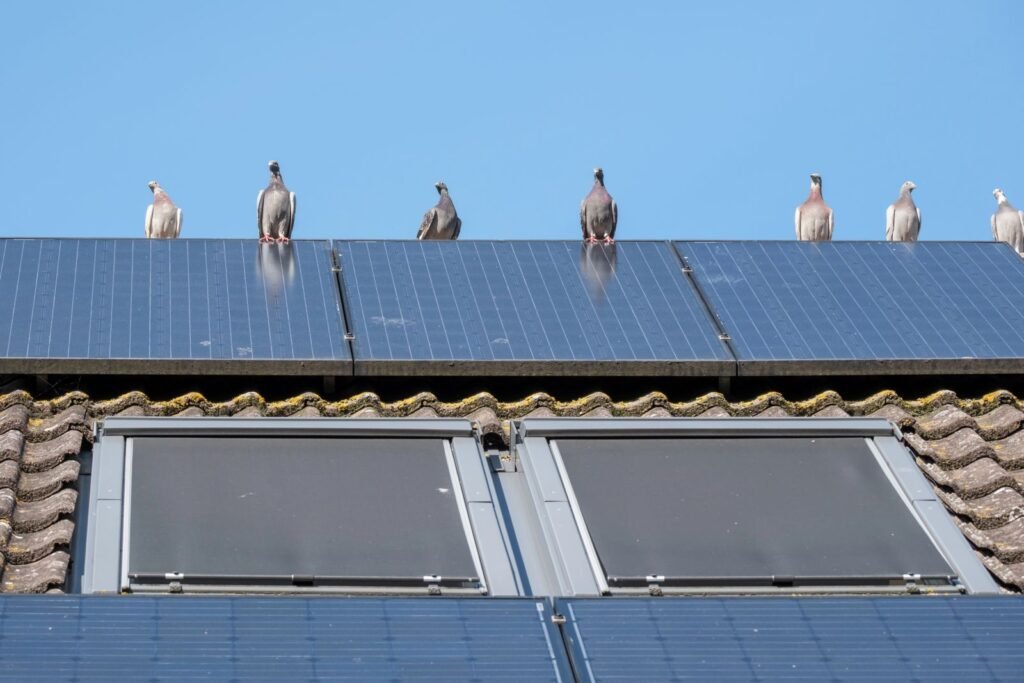
Birds can be a persistent issue for school solar systems.
Large roofs, sheltered spaces and relatively undisturbed areas beneath solar panels can make school buildings attractive nesting locations.
Once birds begin nesting underneath an array, the resulting contamination may go beyond the panel surface.
Droppings can build up across the glass, while feathers, leaves and nesting materials may collect beneath and around the system.
Cleaning can remove existing contamination, but repeated bird activity may cause the same problem to return.
Where nesting is ongoing, solar panel bird proofing may be worth considering as part of a broader maintenance strategy.
Preventing access beneath the array can help reduce recurring nesting and make it easier to keep the surrounding roof area cleaner.
How Often Should Schools Have Their Solar Panels Cleaned?
There is no fixed schedule that applies to every school.
The appropriate cleaning frequency depends on the environment, the size and position of the array, local bird activity and how quickly contamination accumulates.
For many properties in Melbourne, cleaning every six to twelve months can provide a useful general starting point. However, a school surrounded by trees or experiencing heavy bird activity may need more regular attention.
The condition of the system should guide the schedule.
Schools can also use solar monitoring data to help identify changes in performance. If solar production appears lower than expected and weather conditions do not explain the difference, panel contamination may be one factor worth investigating.
For Melbourne schools looking into solar panel cleaning, a condition-based approach is usually more useful than simply cleaning on the same date every year without assessing what the system actually needs.
Cleaning Should Form Part of a Broader Maintenance Plan
Solar panel cleaning is important, but it should not be viewed as the only form of maintenance a school solar system may require.
Cleaning addresses surface contamination. It does not diagnose electrical faults, inverter problems or other technical issues that may affect performance.
If a system continues producing less power even after the panels have been cleaned, further investigation may be needed.
A broader maintenance approach can include regular monitoring, visual inspections and solar system health checks.
This helps schools distinguish between performance loss caused by dirt and problems that may be related to another part of the system.
Why Professional Cleaning Is Better Suited to School Sites
Cleaning solar panels on a school roof is not a suitable task for teaching staff, grounds staff or general maintenance teams unless they are specifically trained and equipped for the work.
Roof access introduces fall risks, while solar systems contain live electrical components that require appropriate care.
Using a professional solar panel cleaning provider helps ensure the work is approached with the right equipment, access planning and cleaning methods.
Professional cleaners should also understand that school environments require a higher level of coordination than many standard commercial sites.
The job needs to be organised around students, staff and existing school activities, rather than treating the property as an empty worksite.
What Should Schools Consider Before Booking Solar Panel Cleaning?
Before arranging cleaning, it helps to gather some basic information about the site.
Schools should consider which buildings contain solar panels, how contractors can access those areas and when those buildings are least active.
It is also useful to identify any known bird problems, heavy tree coverage or areas where dirt tends to accumulate.
If the school has solar monitoring data available, reviewing recent performance may also provide useful context.
From there, the cleaning provider can work with the school to determine an appropriate schedule and approach.
The aim should be to complete the work efficiently while keeping disruption and access risks to a minimum.
Frequently Asked Questions
When is the best time to clean solar panels at a school?
School holidays, pupil-free days and other low-activity periods are often the most practical times for solar panel cleaning. The best option depends on the size of the system, site access, school activities and weather conditions.
How often should school solar panels be cleaned?
Many solar systems can benefit from cleaning every six to twelve months, although the right frequency depends on the site. Schools surrounded by trees or experiencing significant bird activity, dust or pollution may require more frequent cleaning.
Can solar panels be cleaned while students are at school?
In some situations, yes, but additional planning may be required. Contractors may need to establish exclusion zones, control roof access and schedule work around student movement. For larger jobs, completing the work when fewer students are present is often preferable.
Does rain clean school solar panels?
Rain can remove some loose dust but may not remove bird droppings, pollen, grime, organic residue and other stubborn contamination. Professional cleaning provides a more thorough way to clean the panel surface.
Can school maintenance staff clean solar panels?
Roof-based solar panel cleaning involves access and electrical risks. Schools should use appropriately trained and equipped professionals rather than asking staff to access roofs or work around solar equipment without the necessary expertise.
Can birds affect school solar panels?
Yes. Birds can leave droppings across the panels and may nest underneath the array. Feathers, leaves and nesting materials can also accumulate around the system. Where bird activity is persistent, bird proofing may help reduce recurring problems.
Should solar panels be inspected when they are cleaned?
Cleaning provides a useful opportunity to observe the visible condition of the array, but it is not the same as a full system inspection. If production remains unexpectedly low or faults are suspected, a solar system health check may also be appropriate.
How can schools minimise disruption during solar panel cleaning?
The most effective approach is to schedule cleaning during quieter periods, plan contractor access in advance and identify any areas that need to be temporarily restricted. Clear communication between the school and cleaning provider can help the work proceed smoothly.
Professional Solar Panel Cleaning for Melbourne Schools
Solar systems are a long-term investment for schools, and keeping the panels clean is one part of protecting that investment.
For educational facilities, successful solar maintenance depends on more than the quality of the clean itself. Safety, access, timing and communication all play an important role.
At Cleantek Group, we provide professional solar panel cleaning in Melbourne for schools, other commercial properties as well as residential homes. We can work around site requirements, school calendars and access considerations to help minimise disruption while keeping solar arrays clean and well maintained.
We also provide solar system health checks and bird-proofing services where schools need a broader approach to ongoing solar maintenance.
By planning cleaning around quieter periods and addressing contamination before it becomes excessive, schools can keep their solar systems better positioned to perform efficiently throughout the year.
Also see our article – What Is Included in a Professional Solar Panel Cleaning Service?
Talk to our team at Cleantek about getting your school’s solar panels professionally cleaned.
Phone: 1300 13 25 14
Email: info@cleantekgroup.com